Friday, May 15, 2009

Kofi Annan: "Have my son and I got a deal for you!"

The Guardian - May 15, 2009

A green deal for Africa

The evidence is clear: Africa is experiencing the powerful impact of climate change. Weather patterns are changing, resulting in more droughts and floods, and higher air and water temperatures. Glaciers on the famous Rwenzori mountains, long fabled as the Mountains of the Moon, have shrunk by half since the late 1980s – symbolic of more profound changes taking place.

The effects on people, particularly the poor, are severe. Farmers, pastoralists, fishing communities and town dwellers are vulnerable to changes in water availability and agricultural productivity. As yields drop, people need other sources of income to meet their basic needs. A warmer climate increases the risk of vector-borne diseases such as malaria. Even if the temperature rise can be kept within the 2C band, an additional 40-60 million Africans are likely to be exposed. Economic necessity and competition for resources are already resulting in mass movement of people within countries and across borders, heightened social tension and, in many cases, violence.

The economic implications are enormous. Receipts from agricultural activities, which account for over half the jobs and GDP in many African countries, may decline sharply. And just as national ­revenues are strained, demand for ­public expenditure will increase.

African ministers of finance are meeting in Rwanda next week to craft a response to climate change. They are central to finding a solution, for climate change cannot be treated as a sectoral issue. It is fundamental to the success of economic growth and achievement of the millennium development goals.

The news is not all bad. Climate change opens up opportunities to generate revenue and diversify economies. Projects to reduce greenhouse gas emissions can help rich countries meet carbon offset obligations and generate revenue for entrepreneurs and governments. The clean development mechanism, for example, allows industrialised countries to invest in projects that reduce emissions in developing countries, as an alternative to more expensive emissions reductions in their own countries.

Other schemes offer African countries the chance to benefit from global payments for preservation of forests, which in turn capture carbon and preserve soil, water and life. Indeed, long-term climate change strategies offer a chance for African countries to leapfrog towards efficient renewable technologies.

Effective policies and creative market measures are needed to mobilise investment in renewable power sources such as wind, solar, geothermal and biomass. A resource-efficient green-economy future will require financial support and technology transfer from more advanced economies. This would only be fair. After all, Africa accounts for a mere 2.3% of fossil fuel consumption, though it has 13.8% of the world's population.

But recognition that Africa is least responsible yet most vulnerable is not enough. African governments need to decide how they will adapt their economies and protect their people, and set out what they expect the international community to do to support them.


[Ed - the words "Kofi Annan" and "deal" in the same sentence should raise alarm bells for any right-thinking person. As Secretary-General of the U.N., Annan presided over Oil-for-Food, perhaps the biggest financial scandal in history - and in which his own son was involved. He presided over yet another financial scandal, involving the U.N.'s procurement office. There was even a drug-smuggling ring operating out of his mailroom.]

Thursday, May 14, 2009

Greg Combet: "I haven't got a brain - only straw"

The Sydney Morning Herald - May 14, 2009

Historic emissions trading scheme bills tabled

The Federal Government has thrown down the gauntlet on emissions trading, tabling laws in Parliament to set up the scheme. [Ed - does this make the Federal government "schemers"?]

Parliamentary secretary Greg Combet quoted approvingly from an unusual source - Opposition Leader Malcolm Turnbull - as he urged the Coalition to pass the scheme.

Mr Turnbull had moved to set up his own emissions trading scheme (ETS) when the Coalition was last in Government and should follow it through, he said.

"With this bill, Mr Turnbull has the chance to see it through," Mr Combet said after quoting a comment the Opposition Leader made to Parliament in 2007. Now is the time for action."

The Government was determined to have the scheme enacted, Mr Combet said, urging all parties to support the legislation.

Opposition MP Wilson Tuckey heckled Mr Combet as he tabled 10 climate change bills, totalling more than 600 pages.

"You just sold out the workers of Australia who sent you here," Mr Tuckey said.

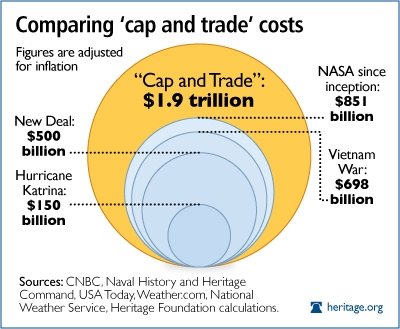
The emissions trading scheme would slash greenhouse gas emissions by putting a price on carbon pollution. The scheme will cut greenhouse gas emissions by between 5 and 25 per cent over 2000 levels by 2020. The Government has committed to a 25 per cent reduction if there is a global agreement in Copenhagen. The scheme will start on July 1, 2011, which is one year later than the Government originally planned.

A fixed carbon price phase will apply between the beginning of the scheme and up to June 20, 2012. During that phase, each carbon permit would cost $10 a tonne. As expected, the scheme has been delayed until July 2011, with the first year to have a low carbon price. There is increased compensation to big business with some companies receiving 95 per cent of their carbon permits for free. The Government wants the laws passed in June.

"The Rudd Government accepts the science on the issue of climate change - increasing concentrations of carbon pollution in our atmosphere are causing global warming," Mr Combet said. "The carbon pollution reduction scheme is one of the most significant environmental and economic reforms in the history of our nation," he told Parliament. "Global action is needed to reduce carbon pollution to avoid the dangerous impacts of climate change and Australia must play its part in this international action."

Climate change was one of the Rudd Government's highest priorities, Mr Combet said.

"Substantial assistance will be provided to emissions-intensive trade-exposed industries, including a global recession buffer of additional assistance for the first five years of the scheme," Mr Combet said.

It was important legislation enacting the scheme was passed this year to give business certainty. It would also maximise the chances of a global deal at climate change talks in Copenhagen in December.

"The Government could agree to a target at Copenhagen, knowing that the country has the capacity to deliver on that target in an economically responsible way," he said.

"To major developing countries, it would send the signal that Australia is serious about delivering the emissions reductions to which we have committed - and therefore encourage action from them."

But as the bills were tabled, opposition to the ETS continued to rage outside the house.

Australian Greens leader Bob Brown said the public did not want a delayed, toothless scheme, accusing the Government of not listening to his party's concerns.

Nationals senator Ron Boswell says the Coalition should not be "psyched out" of its opposition to emissions trading.

The Government needs the support of either the Coalition or the crossbench to win parliamentary approval for the scheme.

The Opposition says it will release its climate policy and position on emissions trading next month. Debate on the Carbon Pollution Reduction Scheme Bill 2009 was adjourned.

Climate Change Minister Penny Wong has referred legislation to the Senate's economics legislation committee. The committee will report back by June 15. The Opposition failed in a bid to have a longer inquiry.


Greg, when you do get a brain...watch the following:

Friday, May 8, 2009

Ban Ki-moon: The Boy who Cries "Wolf!"

In the UN-real world...

January 29, 2007
Plans for an emergency summit of world leaders to break the international impasse on cutting greenhouse gases are being discussed by Ban Ki-moon.

February 5, 2007
Poor countries will suffer most from global warming, Ban Ki-moon warns. “The world has reached a critical stage in its efforts to exercise responsible environmental stewardship,” Mr. Ban said.

March 2, 2007
Climate change poses at least as big a threat to the world as war, the new UN secretary general, Ban Ki-moon, warned last night. "I believe that the world has reached a critical stage in its efforts to exercise responsible environmental stewardship." [Ed - for those who weren't paying attention last month.]

March 21, 2007
"The Secretary-General is exploring ways and means ... to facilitate global efforts for dealing with climate change." Environment ministers will meet for a next round of formal U.N. climate negotiations in Bali, Indonesia, in December.

May 8, 2007
Climate change is no longer a matter for scientific debate, but has become a question to be solved at the international political level, the UN secretary-general's three new special envoys on the issue said today.

June 16, 2007
A Climate Culprit In Darfur. "Almost invariably, we discuss Darfur in a convenient military and political shorthand -- an ethnic conflict pitting Arab militias against black rebels and farmers. Look to its roots, though, and you discover a more complex dynamic. Amid the diverse social and political causes, the Darfur conflict began as an ecological crisis, arising at least in part from climate change."

July 27, 2007
Ban Ki-moon urged the United States to take the lead in combating global warming during a visit to California to learn about the state's campaign to curb its greenhouse gas emissions. "The whole planet Earth is at a crucial juncture," Ban said. "Time is of essence. The cost of inaction will be far greater than the cost of action."

September 19, 2007
Ban Urges Strong Message From Climate Summit. "Before it is too late we must take action."

September 22, 2007
Environmentalists need to mobilize popular support to allow governments to legislate to fight climate change, said United Nations Secretary-General Ban Ki-moon.

September 24, 2007
"Climate change is a serious threat to development everywhere. Indeed, the adverse impacts of climate change could undo much of the investment made to achieve the Millennium Development Goals," said Ban Ki-moon in his address to the high-level event on climate change in New York.

October 12, 2007
Ban urges green private sector. Mr Ban said that tackling climate change and global warming is a "moral imperative and a defining issue of our era".

November 11, 2007
UN warns of climate danger. A report prepared by the UN's panel on climate change has warned of the danger of climate change in the strongest terms yet. Mr Ki-Moon who recently visited Antarctica to witness the effects of global warming said: "I come to you humbled after seeing some of the most precious treasures of our planet threatened by humanity's own hand."

December 12, 2007
Speaking at the climate change conference on Bali, UN Secretary General Ban Ki-moon has said that preventing global climate change is the "moral challenge of our generation." Failure to act could send the human race into oblivion, he warned.

January 24, 2008
Ban Ki-moon warns of the coming water wars. "The consequences for humanity are grave. Water scarcity threatens economic and social gains and is a potent fuel for wars and conflict.”

February 1, 2008
Global warming could cost the world up to $20 trillion over two decades for cleaner energy sources and do the most harm to people who can least afford to adapt, U.N. Secretary-General Ban Ki-moon warns in a new report.
[Ed - the increasingly irrelevant U.N., which under Kofi Annan's "leadership" couldn't manage the $64 billion Oil-for-Food program without having it degenerate into corruption and squalour, now wants us to trust it to administer a $20 trillion (plus) Money-for-Nothing program? Ever wonder why Ban Ki-moon is running so hard on this issue?]

February 6, 2008
Many of today’s conflicts around the world are being fuelled or exacerbated by water shortages and climate change is only making the situation worse, Secretary-General Ban Ki-moon told the General Assembly today. “There is a window of opportunity right now to really move forward in Darfur. We cannot afford to squander it through delay and dithering.”

March 30, 2008
Ban Ki-Moon takes advice from Kevin Rudd. "International progress on fighting climate change is too slow", Australian Prime Minister Kevin Rudd and United Nations Secretary-General Ban Ki-moon have agreed.

April 7, 2008
UN chief warns of danger to human health caused by climate change. In his message marking this year's World Health Day, Ban noted that, in addition to causing more frequent and more severe storms, heat waves, droughts and floods, climate change jeopardizes the quality and availability of "water and food, our fundamental determinants of nutrition and health."

June 27, 2008
United Nations Secretary-General Ban Ki-Moon has urged the industrialised nations to tackle the crises of global food insecurity, climate change and development in poor countries. "If ever there were a time to act, together as one, it is now," Ban told journalists.

July 3, 2008
Global Action to Save Global Growth. "Climate change and environmental degradation threaten the future of our planet. Population growth and rising wealth place unprecedented stress on the Earth's resources."

August 20, 2008
Ban Pledges Support for Pacific Islands Over Climate Change. "Climate change is not science fiction," Ban said in a message to this week's summit of the Pacific Islands Forum, a group of 16 nations. "As your countries know all too well, it is real and present."

September 2, 2008
Ban warns against waiting for climate deal. "We must fight the urge to postpone everything until Copenhagen. Surely we can make concrete progress on some issues," the UN chief said, adding that the Poland meeting should serve as "a very successful bridge" for Copenhagen.

September 23, 2008
UN General Assembly Opens With Climate and Energy Concerns. UN Secretary-General Ban Ki-moon today opened the General Assembly's annual high-level debate by urging world leaders to work together to solve the most pressing and intractable problems, from climate change and the energy crisis to entrenched poverty and the conflict in Sudan's Darfur region.

December 11, 2008
U.N. chief tells world: we need a Green New Deal. "The financial crisis cannot be an excuse for inaction or for backsliding on your commitments," he told ministers. The climate crisis "affects our potential prosperity and peoples' lives, both now and far into the future."

January 30, 2009
Ban Ki-Moon called on world leaders at the World Economic Forum meeting in Davos, Switzerland, to use the global economic crisis as impetus to form a ‘Green New Deal' that would create jobs and fight climate change.

February 5, 2009
UN chief Ban Ki-moon has warned a climate change conference in India that failure to tackle the issue will lead to global economic upheaval. "Failure to combat climate change will increase poverty and hardship. It will destabilise economies, breed insecurity in many countries and undermine our goals for sustainable development."

March 22, 2009
Secretary General Ban pointed out the seriousness of climate change and the scale of the task ahead, saying, "we are on a dangerous path. Our planet is warming. We must change our way. We need green growth that benefits all communities. We need sustainable energy for a more climate-friendly, prosperous world. This is the path of the future. We must walk it together."

May 6, 2009
“There is little time to lose,” Mr Ban repeated several times. “The window of opportunity is closing fast. Climate change is a global threat, its impact is already upon us: no issue is more essential for our survival as a species.”


Meanwhile, back in the real world...

Monday, May 4, 2009

Penny Wong: Look - I'm with Stupid

Ministry for Climate Change and Water Media Release (May 4, 2009)

A new target for reducing Australia’s carbon pollution

According to our Dear Leader of the Carbon Revolution, the Rudd Government has today committed to reduce Australia’s carbon pollution by 25 per cent below 2000 levels by 2020 if the world agrees to an ambitious global deal to stabilise levels of CO2 equivalent at 450 parts per million or lower by mid century.

This new commitment follows extensive consultation with environment advocates on the best way to maximise Australia’s contribution to an ambitious outcome in international negotiations at Copenhagen this December.

If the world achieves this agreement, Australia will meet this 25 per cent target by harnessing the CPRS, the expanded Renewable Energy Target, and with substantial investment in clean, renewable energy and energy efficiency and strategic investment in carbon capture and storage.

Up to 5 percentage points of this target could be met by purchasing international credits, such as avoided deforestation credits, using CPRS revenue no earlier than 2015.

In the White Paper, the Rudd Government emphasised clearly that an ambitious agreement to stabilise levels of CO2 equivalent at 450 parts per million or lower by mid century would be squarely in Australia’s national interest.

At that time, we committed Australia to playing its full and fair part in an agreement, but assessed prospects for such an ambitious deal in the near term were challenging.

Since then, international developments have improved prospects.

The Obama administration has already injected a great deal of confidence in the process through its unambiguous commitment to play a leading role in global efforts to limit climate change.

President Obama has reinforced his election commitments to mid and long term carbon pollution reduction goals and to introduce an emissions trading system similar to the CPRS.

His Major Economies Forum on Energy and Climate is helping drive progress in UN negotiations for a global agreement.

The United Kingdom has also recently announced a strengthening of its 2020 target for reducing carbon pollution.

Nevertheless, achieving an ambitious global agreement will still be very tough.

It will require a significant further shift in negotiating dynamics so that all advanced and major developing economies take serious action to restrain and then reduce emissions.

The Government will retain its White Paper target range of:

  • an unconditional commitment to reduce carbon pollution by 5 per cent by 2020; and
  • a commitment to reduce carbon pollution by 15 per cent by 2020 if there is an agreement where major developing economies commit to substantially restrain emissions and advanced economies take on commitments comparable to Australia’s.

A Ratification Review will be established in addition to the Joint Standing Committee on Treaties (JSCOT) Process to assess whether the terms of any global agreement meet the conditions set out for Australia to adopt the 25 per cent target.

Should the world achieve this ambitious agreement, the Government would seek a new election mandate for increased 2050 targets.

Crucially, this new target reinforces the need to secure passage of the Carbon Pollution Reduction Scheme this year.

Australia cannot responsibly sign up to targets without a means to deliver them.

The attached documents set out the conditionality for Australia’s targets and the terms of the Ratification Review.

Saturday, May 2, 2009

Barack Obama: Fool or Liar?

The White House Press Office (April 29, 2009)

Remarks by the President in Arnold, Missouri Town Hall

According to the President of the People's Democratic Republic of America, "there is a now long-term problem that we've got to deal with, and that's is [sic] a tough one. And that is this issue of climate change. I want to tell you the truth here because this is going to be a debate that we're going to be having over the course of the next year. The average person probably thinks, yes, climate change, that's kind of a drag, but it's not one of my top priorities -- because you don't really see it or feel it, it doesn't hit your pocketbook, it doesn't have to do with your job directly. And so the tendency is just to kind of push it off. People think, well, this just has to do with polar bears, and I feel bad about polar bears but I've got other things to worry about.

I don't think people fully appreciate the potential damage

-- economic damage, as well as environmental damage -- that could be done if we are not serious in dealing with this problem. If the temperature goes up a couple of degrees, well, it will change weather patterns pretty significantly. It could create droughts in places where we haven't had drought; it could bring insect-born diseases up into places like Missouri that we haven't seen before. But we can probably manage. If the temperature of the planet goes up 5 degrees, you're now looking at coastlines underwater. You're now looking at huge, cataclysmic hurricanes, complete changes in weather patterns. Some places will get hotter, some places will get colder. Our economy would be disrupted by tens of trillions of dollars.

So this is no joke. And the science shows that the planet is getting warmer faster than people expected. Even the most dire warnings, it's gotten -- it's moved forward faster than anybody expected. They're talking about, just in a few years, during the summer, there won't be any ice in the Arctic, something we have never seen before. So we have to do something about it.

Now, the question, again, is how do you do it in an intelligent way? There are some people who would say this is such a big problem that you just got to shut everything down. Well, I'm sorry, that's not going to happen. People have got to go to work, and we've got to drive, we've got to fly places. Our economy has to grow.

But there are ways that we can do it that are intelligent and smart. And I think one of the best ways to do it is to say, in a gradual way, let's set a cap, a ceiling, on the carbon pollution that comes out of all sorts of places: our utilities, our cars, our industries. Let's take a look at all the carbon that's being sent into the atmosphere that's causing climate change, and let's say that each year we're going to reduce the allowable amount in total that is released.

And what we'll do to each industry is we'll say we're going to make a deal with you: Come up with ways to improve your processes and bring pollution down, and you can make money by sending out less pollution; on the other hand, if you have more pollution than you were allowed, then you're going to have to pay money. You start creating a market for the clean energy, and you start making it less economical to produce harmful energy.

Now, if we do that in a smart, gradual way and in a way that protects consumers from the initial attempts of utilities, for example, to pass on those costs to consumers -- which is what they'll try to do, so we've got to rebate some of that money to make sure that people are held harmless -- then I actually think that we can get control of this problem, we can save the polar bears, but more importantly we can make sure that we are preserving our economy.

And here is the great opportunity. Everybody knows that we're going to have to do this. The country that gets there fastest, the country that's the first one to figure out really good battery technology for a plug-in hybrid car, the first country that perfects wind power and solar power and knows how to get it from one place to another in an efficient way, that country will dominate the economy of the 21st century the same way that America dominated the 20th century. I want that to be America. That's what we're fighting for."

Friday, May 1, 2009

Penny Sackett: I'm from the Government - I'm here to help you.

Australian ABC News (April 20, 2009)

'World has 6 years to act' on climate change

The Government's chief scientist wants the country to set the toughest possible targets for reducing greenhouse gas emissions, warning that action must begin now against climate change.

The Government has committed to cutting Australia's emissions by 5 to 15 per cent of 2000 levels by 2020 and wants to start an emissions trading scheme next year.

However, the target has been slammed by the Greens and environmental groups as being too low and the Opposition has also recently signalled it would support a stronger cut in emissions.

Professor Penny Sackett would not put an exact figure on what she thought the target should be but she said she has advised the Government to set the steepest target possible.

"We know we need to set the highest possible target we can now not only to start the process but because the lower the targets now, the more difficult it will be to achieve the aim later," she told Sabra Lane on ABC Radio's PM program.

"What we all need to do is join together and begin to act because there are many things that need to be put in place and I would like to see action now."

"I believe the Australian Government is aware that the targets need to be ambitious but it is also aware that we need to put a mechanism in place and that is actually the first step."

Professor Sackett has also warned the world only has six years to decrease its emissions to avoid damaging climate change.

"We know that the rate at which we are putting greenhouse gases into the atmosphere is increasing rather than decreasing," she said.

"We also know that if we want to maintain that level of climate change which we could measure by the increase in global average temperature to 2 degrees then we have six years to reverse the trend from increasing CO2 emissions to decreasing CO2 emissions.

"It's not long, which is why we need to begin to act now."

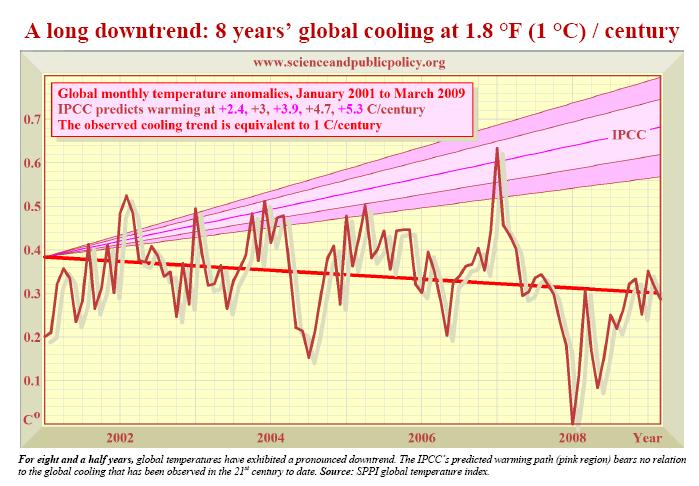
Last week two scientists told a Senate inquiry that there was no evidence to suggest that global warming was caused by human activity.

But Professor Sackett says she is surprised a debate over the science of climate change still exists.

"There is no doubt the evidence is very clear that [climate change] is under way and it is also clear that the largest portion of that change is due to human action through deforestation and emissions of greenhouse gases into the atmosphere," she said.